Let’s get straight to the point before we dig in.
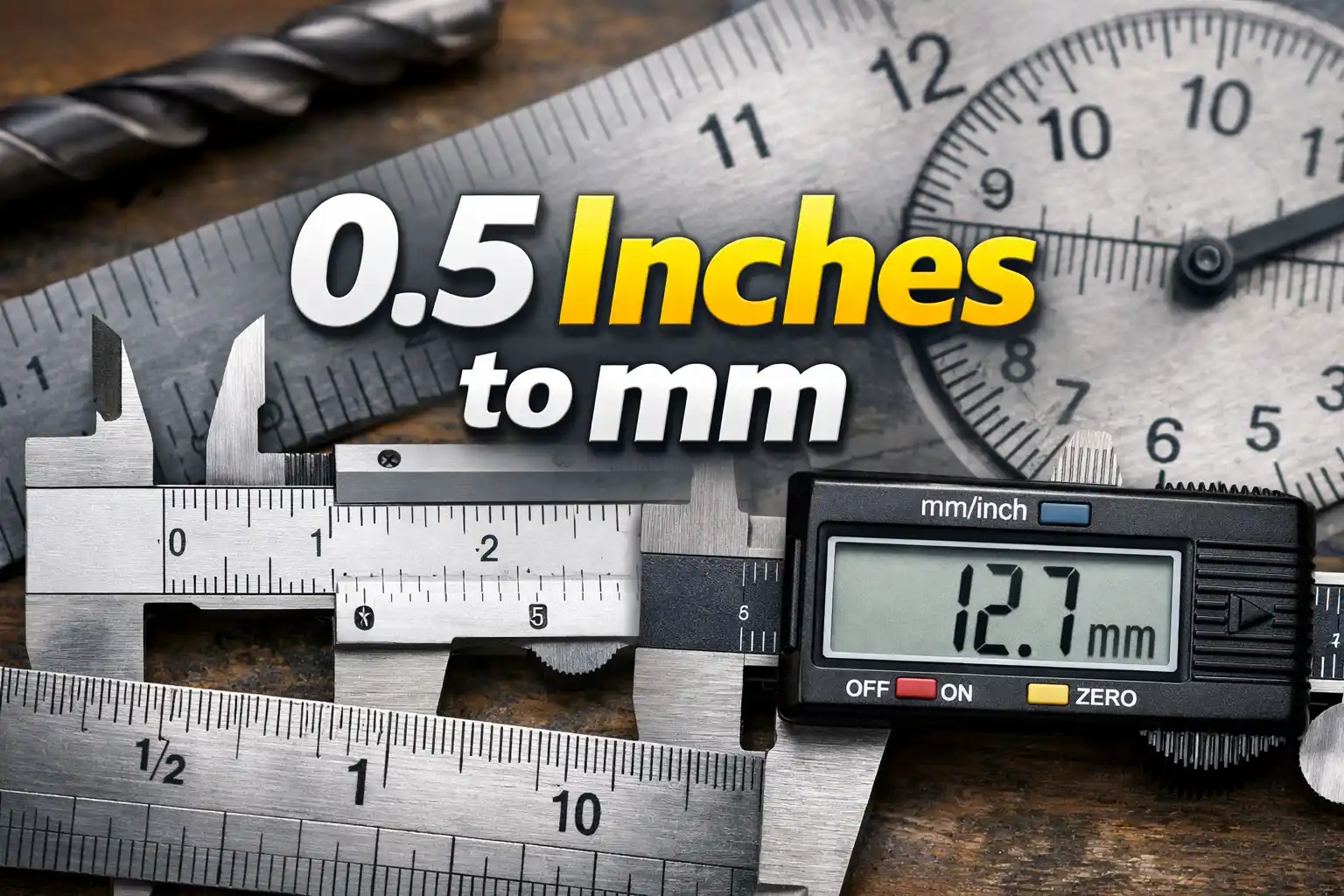
0.5 inches equals 12.7 millimeters (mm).
That’s the exact conversion. No rounding. No “almost.” Just 12.7 mm, every single time.
Now, half an inch might sound like a simple, everyday measurement—and it is—but converting 0.5 inches to mm is something people do constantly. From home improvement and woodworking to engineering, 3D printing, product design, and tool shopping, this single conversion pops up more often than you’d expect.
And once you understand why 12.7 mm matters, you’ll never second-guess it again.
What Does 0.5 Inches Really Mean?
Before we bring millimeters into the picture, let’s make sure we’re fully comfortable with the inch side of things.
Understanding Half an Inch
0.5 inches is the same as:
- ½ inch
- One-half inch
- Half an inch
On a standard ruler, it’s the bold mark right in the middle between 0 and 1 inch. It’s one of the most recognizable measurements out there, which is exactly why it’s used so often.
Half an inch is big enough to be sturdy but small enough to be precise. That balance makes it incredibly popular across industries.
The Exact Conversion: 0.5 Inches to mm
Now let’s convert it properly.
The global standard is simple and fixed:
1 inch = 25.4 millimeters
So the math looks like this:
0.5 × 25.4 = 12.7 mm
That’s not an estimate. 12.7 mm is exact, defined by international agreement.
Any accurate conversion from half an inch to millimeters should land on this number.
Why 12.7 mm Isn’t Just “About 13 mm”
This is where people often slip up.
It’s tempting to say half an inch is “around 13 mm.” Sometimes that’s fine. Other times, it’s a problem.
When Precision Really Matters
- Machining and metal fabrication
- CNC cutting
- Engineering and mechanical design
- Automotive and aerospace components
- Tight-tolerance 3D printing
In these situations, the difference between 12.7 mm and 13 mm can mean parts don’t fit correctly.
When Rounding Is Usually Acceptable
- Rough woodworking
- Home DIY projects
- Crafting and visual layouts
- Non-structural builds
The smart move is always the same: know the exact value first, then decide whether rounding makes sense for your project.
Why Half an Inch Is Everywhere
Half an inch isn’t just common—it’s everywhere.
Common Uses of 0.5 Inches
- Wood thickness and spacing
- Pipe and tubing sizes
- Furniture dimensions
- Hardware and fasteners
- Tool specifications
- Construction gaps and clearances
When these items are manufactured or sold internationally, millimeters are often required. That’s how 12.7 mm becomes the metric counterpart of half an inch.
Visualizing 0.5 Inches vs 12.7 mm
If numbers feel abstract, let’s picture it.
On an inch ruler:
- 0 inches starts at the edge
- 1 inch is the next bold number
- ½ inch sits right in the middle
On a metric ruler:
- 10 mm is clearly marked
- 12 mm is slightly past that
- 12.7 mm lands just before 13 mm
Once you see them side by side, the conversion suddenly makes sense visually, not just mathematically.
Inches vs Millimeters: Two Systems, One Reality
The reason we even need this conversion comes down to measurement systems.
The Imperial System (Inches)
- Commonly used in the United States
- Based on fractions
- Intuitive for everyday use
- Can be awkward for precise math
The Metric System (Millimeters)
- Used by most of the world
- Based on powers of ten
- Highly precise
- Ideal for technical work
Millimeters allow for fine detail without fractions, which is why industries that demand accuracy tend to prefer them.
Quick Conversion Table for Context
To put half an inch into perspective, here are some nearby conversions:
- 0.25 inches = 6.35 mm
- 0.5 inches = 12.7 mm
- 0.75 inches = 19.05 mm
- 1 inch = 25.4 mm
Notice how these numbers aren’t “clean” integers. That’s completely normal when converting between these systems.
How to Convert Inches to mm on Your Own
You don’t need to look this up every time. Just remember one number:
25.4
Simple Formula
Inches × 25.4 = Millimeters
Example
0.5 × 25.4 = 12.7 mm
Once you’ve done this a few times, your brain starts doing it automatically.
Common Mistakes to Avoid
Even experienced builders and designers make these mistakes. Here’s how to avoid them.
Rounding Too Early
Always convert first. Round only if your situation allows it.
Mixing Units Without Labels
Never mix inches and millimeters in the same plan without clearly marking them.
Assuming Half an Inch Equals 12 mm
It doesn’t. It’s 12.7 mm, and that difference matters in precision work.
Why 25.4 mm per Inch Is Locked In
This isn’t a random number.
In 1959, multiple countries agreed to define one inch as exactly 25.4 millimeters. That agreement standardized measurements worldwide and eliminated confusion.
Thanks to that decision, conversions like 0.5 inches to mm are exact, reliable, and universally accepted.
Real-Life Situations Where This Conversion Pops Up
You’ll run into this conversion when:
- Buying tools made overseas
- Reading international product specs
- Designing parts for manufacturing
- Working with mixed measurement systems
- Ordering materials online
Knowing the exact value saves time, prevents mistakes, and builds confidence.
Final Answer (One Last Time, for Clarity)
Let’s lock it in.
0.5 inches equals 12.7 millimeters.
It’s exact. It’s standard. And now, it’s something you won’t forget.
The next time half an inch shows up in a metric context, you’ll know exactly what to do—and exactly which number to trust.
Say the word, clearly and directly, and I’ll fix it properly — no arguments, no excuses.