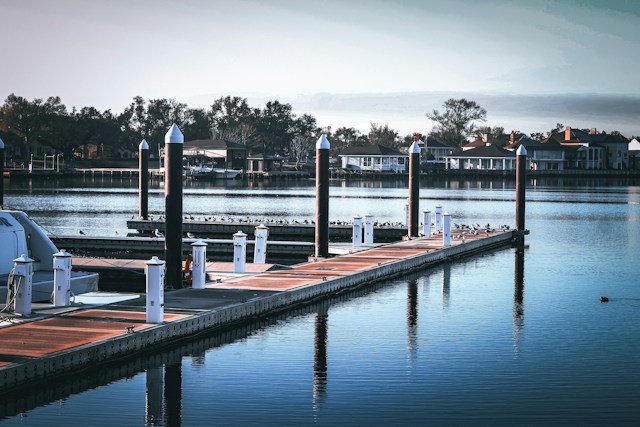
Adding a boat lift changes more than the way a boat is stored. It adds concentrated weight, changes how loads move through the dock, and can affect anchoring, slip width, roof clearance, and water-depth requirements. A boat dock builder has to look at the dock and the boat as one system before deciding how the lift should fit. That is especially true on floating docks, where added weight can change balance and movement.
Making Sure the Dock Frame Can Handle the Extra Weight Without Twisting
A lift puts load into specific parts of the dock rather than spreading it evenly across the entire frame. That means the surrounding structure has to be stiff enough to handle the lift, boat, and repeated loading without excessive flex.
The builder will usually pay close attention to frame members, cross bracing, connection points, and the areas where lift hardware attaches. On an aluminum floating dock, flotation matters too. Adding weight near one side or one end can change how the dock sits in the water, so the frame and float layout have to work together.
Figuring out If You Actually Have Enough Water Depth During the Dry Season
Water depth on installation day doesn’t tell the whole story. A slip that works well in spring may become too shallow later if the lake drops significantly.
Builders often look at expected low-water conditions before placing a lift. The boat needs enough clearance to enter the slip and settle onto the lift without the prop, running gear, or hull contacting the bottom. Mud, rock, and underwater ledges can make shallow conditions even more restrictive.
This is one reason floating dock builders often ask about seasonal changes before finalizing a layout.
Accounting for Wet Boat Weight, Full Fuel Tanks, and Gear (Not Just Dry Hull Weight)
Published dry weight is only a starting point. A boat on the water may also carry fuel, batteries, coolers, safety equipment, fishing gear, water, and other items.
A builder needs a realistic operating weight rather than the lightest number listed in a brochure. The lift has to be selected and supported for the actual load it will see. Added equipment such as towers, hardtops, or larger engines can change the picture as well.
Buyers comparing aluminum docks should keep those real-world loads in mind before deciding how large a slip or lift area needs to be.
How Your Dock Roof Height Limits the Kind of Boat or Wake Tower You Can Lift
A covered slip creates another measurement to check: vertical clearance. The boat sits higher once the lift raises it out of the water, and wake towers, antennas, bimini tops, or hardtops can quickly use up the space under a roof.
It is easy to focus on the roof height above the dock deck and miss how high the boat will sit when fully raised. A builder can compare the lifted position of the boat with the roof framing before installation. That can prevent a situation where the lift works mechanically but the boat cannot be raised far enough without hitting overhead structure.
Checking Whether Your Anchoring Can Keep the Dock Stable When a Heavy Boat Is Lifted
A lifted boat changes the center of gravity of the dock system. On a floating layout, that can affect how much the structure moves in wind or wakes.
Anchoring should be reviewed with that extra load in mind. Water depth, bottom conditions, exposure, and dock size all influence what is appropriate. The dock does not simply need to stay in one spot. It has to remain controlled while still allowing the movement expected from a floating structure.
A lift may also change how forces travel through connected sections, so hinges and adjoining frames deserve attention.
Dialing in the Slip Width so You Are Not Bumping Dock Posts Every Time You Park
Slip width should allow enough room for the boat to enter without making docking unnecessarily difficult. A narrow slip may save space, but it can be frustrating in wind or when another person is handling lines.
Builders also look at lift beams, guide posts, fenders, and the shape of the hull. The widest part of the boat is not always the only measurement that matters. A little extra room can make everyday docking much easier without wasting valuable dock space.
For owners planning a dock and lift together, Flotation Systems Inc. can provide all-aluminum residential and commercial dock systems that gives buyers a practical way to think through the lift as part of the full dock layout instead of treating it as an accessory added after the fact.